Talk to your vet first. This article is general information, not veterinary advice. Every animal is different. Check with your vet before changing your pet's diet, especially for puppies, kittens, seniors, pregnant or nursing animals, and any pet with a health condition. Ask them about bones and portion sizes for your pet.
Why raw feeding works
Dogs and cats are biologically designed to eat raw meat, bone, and organ. Kibble is a convenience product, not a biological match. Most commercial pet food is cooked at high temperatures, which degrades protein quality and destroys naturally occurring enzymes and probiotics.
Raw food keeps those nutrients intact. Pet owners who switch commonly report improvements in coat quality, digestion, energy levels, and dental health within the first 4-8 weeks.
What a raw diet looks like
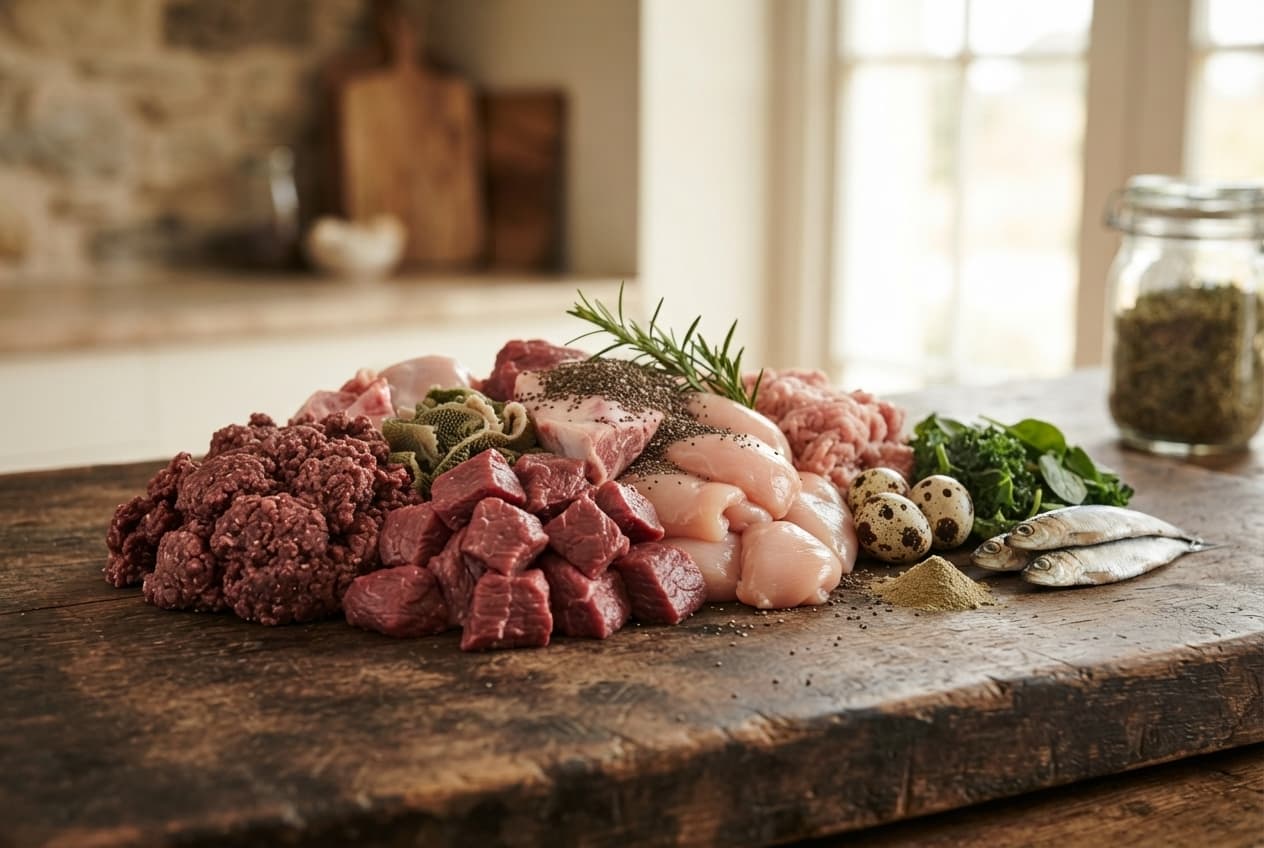
A balanced raw diet includes muscle meat, raw meaty bones, organ meat, and for most dogs, some vegetables. The key is variety over time, not perfect balance in every single meal. A diet of three to five different protein sources across a week covers most nutritional bases.
Muscle meat
60-70% of the diet. Beef, chicken, turkey, venison, goat, possum.
Raw meaty bones
10-15%. Chicken frames, duck necks, lamb ribs. Provides calcium and dental benefits.
Organ meat
10-15%. Liver is essential, rotate with kidney and heart.
Vegetables
Optional for dogs. Lightly blended or fermented for digestibility.
How to transition without stress
Cold turkey switching works for most healthy dogs. Fast for 12 hours, then introduce a single protein source for the first 5-7 days. Chicken is a common starting point. Watch for loose stools; some adjustment is normal in the first 1-2 weeks as the gut flora shifts.
For sensitive dogs or older animals, a gradual transition over 2-3 weeks works better. Start at 25% raw mixed with their current food, increase weekly.
What to expect: Digestion detox in weeks 1-2 is normal. Coat changes become visible around weeks 4-6. Energy and muscle tone improvements are typically apparent by week 8. Most dogs are fully adapted and thriving by 3 months.
NZ-specific considerations
New Zealand has excellent raw pet food options because of the quality of our farming. Waikato beef, Southland lamb, and NZ venison are among the cleanest, most traceable proteins available anywhere in the world.
One NZ-specific note: possum is increasingly popular in raw feeding here. It's a wild, free-range protein with no farming inputs, and dogs take to it readily. It's a genuinely good option and one you won't find anywhere else in the world.
What to look for in a raw food supplier
The key questions: Can they tell you where the protein came from? Is it processed in a dedicated pet food facility with proper hygiene controls? Are the proteins single-sourced or a blend?
At Waikato Petfoods, every protein in the Charlie's range is single-sourced and traceable. If the label says beef, it's Waikato beef. We own the facility. We control the process. That's the standard to hold your supplier to.
Opening 2026 in Hamilton
Come in and ask us anything.
Our team knows the food because we make it. When Charlie's Pet Hub opens, we'll walk you through every product in person. No scripts, no upselling; just straight answers about what your pet actually needs.
Find Us →